
Why it exists
An AI support agent normally means writing code
Putting an AI support agent on a website usually takes engineering work: choosing a model, wiring it up and building a chat widget.
- Building a custom AI chatbot takes coding skills
- Deploying and configuring one is slow
- A business without a website has nowhere to put an agent
What it does
A no-code builder for support agents, with an embeddable widget
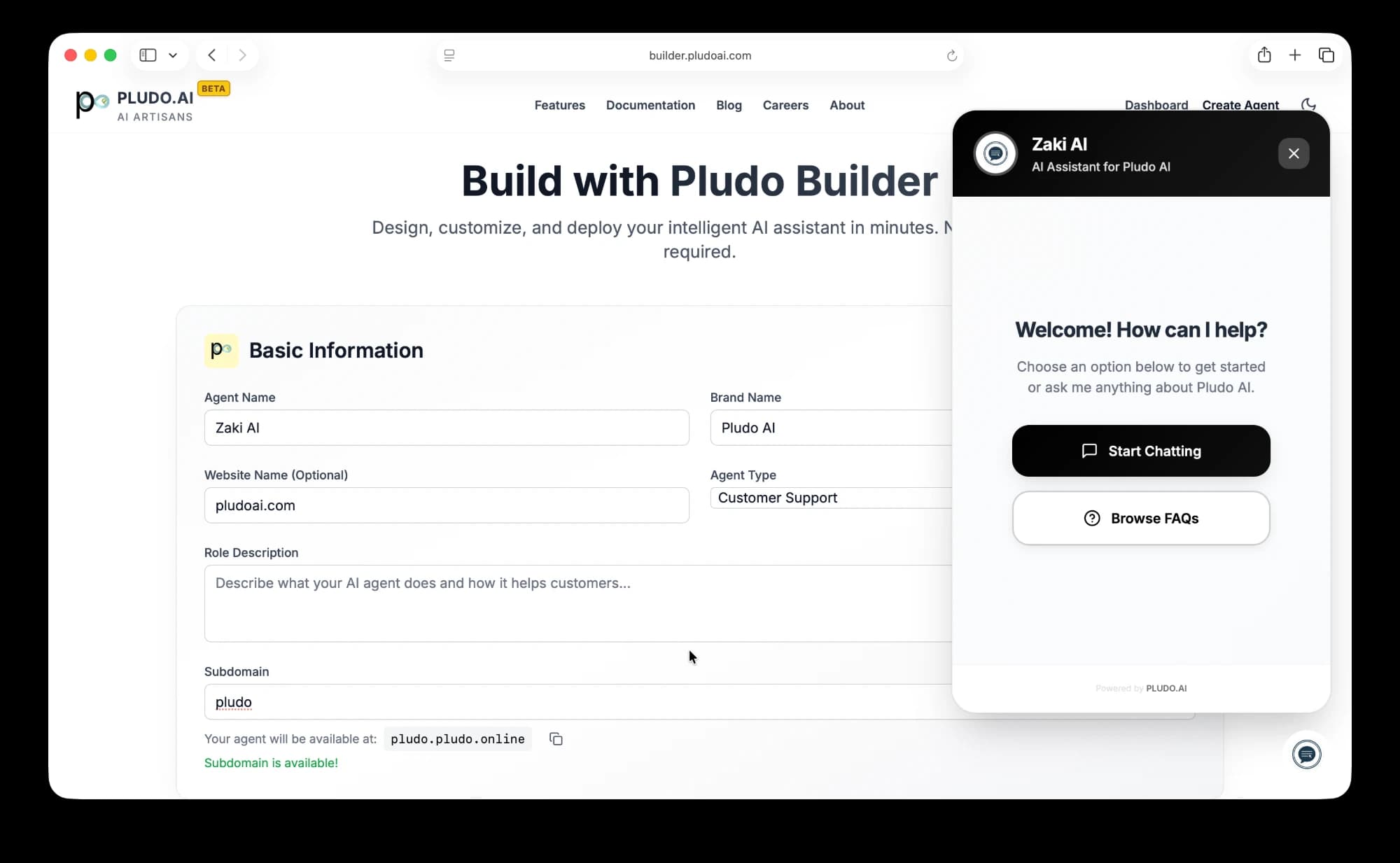
A business describes its agent (name, brand and role), picks an AI provider and model, and gets a chat widget to embed on any website. Every agent also gets its own hosted page on a subdomain. I built it end to end, from model routing to the embeddable widget.
No-code agent setup
Name the agent, set its brand, role and support type through a simple form
Multiple AI providers
Choose OpenRouter, Google Gemini or Z.AI and pick the model per agent
Embeddable chat widget
Drop the assistant onto any website with a single embed
Hosted agent pages
Every agent also gets its own subdomain, no website needed
Bring your own key
API keys are encrypted and used only for that agent's conversations
Screens
Built with
- React
- TypeScript
- Tailwind CSS
- OpenRouter
- Gemini API
- Z.AI
Outcome
Ran as an invite-only beta from July 2025, then discontinued. It is no longer open for sign-ups.
Posts about Pludo Builder
Pludo Builder private beta
In July 2025 I opened a private beta of Pludo Builder, a no-code builder for AI customer-support agents.
Read post